'Paid partnership with [brand]' on Instagram is a disclosure label the creator adds when a brand paid or sent free product. Instagram pays nobody; the brand pays you on terms agreed in DMs or email. A small account gets three kinds of collab: a gifted or paid post on your own account, UGC the brand posts on its page, and whitelisting (ads through your handle). In October 2026, with about 2k followers, my card is $350 for a UGC video, $450 for a Reel on my account, +$100 per 30 days of paid usage and $150 per 30 days for whitelisting. The FTC requires the disclosure: tag plus #ad or 'gifted'.
Okay so, every week a creator asks me “how do I get a paid partnership on Instagram?”, and the question usually hides a misunderstanding: that “Paid partnership” is a program you join and Instagram pays you. It isn’t. “Paid partnership with [brand]” is a disclosure label that you, the creator, add to a post when a brand paid you or sent you product. Instagram pays nobody. The brand pays you, on terms the two of you agree in DMs or email before anything is filmed. I have about 2k followers, my first paid video happened at 14, and Instagram DMs have brought me three paid deals. So here’s how the label works, who pays whom, the three kinds of “collab” a small account can get, and what I charge for each as of October 2026.
What “paid partnership” on Instagram actually means
The label under a username, “Paid partnership with [brand]”, is Instagram’s branded-content tag. When you create a post, Reel or Story, you switch on the branded-content option and tag the brand as your partner. The brand has to approve you as a partner for the tag to appear, so you can’t put it on a post about a brand that doesn’t know you exist. Once tagged, the brand can see how the post performs and, if you allow it, boost or promote it from their side.
That’s the whole feature. It’s a disclosure tool, doing the same job as #ad in a format viewers (and regulators) can read at a glance.
Two things people get wrong about it:
- It doesn’t mean money changed hands. A gifted collab, where the brand sent you a $40 serum and you posted about it, needs the label too: free product is a “material connection” in the FTC’s words.
- It isn’t a payment system. No fee, no commission, no “earnings” tab. Payment happens off the app.
Who pays whom (Instagram pays nobody)
The money in an Instagram collab moves in one direction: brand to creator. Everything about it is set between you and the brand, in writing, before you film: the deliverable (a Reel on your page? a video for theirs?), the pay (cash, product, or both), how long and where they can use the video, and when you invoice. Most of my direct deals are agreed in a DM thread or a short email.
Honestly, this is good news for small accounts. No algorithm decides who gets paid, so a brand can pay you at 300 followers if they like your videos. Three of my paid deals came from Instagram DMs, and a new brand now writes to me about every two weeks, most after seeing my Instagram or portfolio.
The three kinds of Instagram collabs for small accounts
“Collab” means three different deals, priced differently because the brand is buying different things.
| Collab type | Who posts it | Who pays | What you’re charging for | Disclosure |
|---|---|---|---|---|
| Sponsored post (gifted or paid) | You, on your account | Brand (cash or product) | Your content + your audience + a slot on your grid | Paid-partnership tag + “gifted” or #ad in caption |
| UGC | The brand, on its own account | Brand (cash; sometimes product early on) | The video itself, with organic use on their channels | Nothing on your side; you didn’t post anything |
| Whitelisting / partnership ads / Spark Ads | The brand runs ads through your handle | Brand | Your identity as the advertiser, per 30 days | Shows as a sponsored post from your account |
1. The sponsored post. You and the brand agree on a gifted or paid post over DM, you film it and post it on your account with the tag. The brand gets your content and your audience; you give up a spot on your feed. It’s the only one of the three where follower count is part of the conversation, which is why small accounts mostly start here with gifted collabs.
2. UGC. You film a video, the brand posts it on their page. Your face, their account, no label on your side because you never post it. This is my main job, and it’s where followers genuinely don’t matter: my first paid UGC video was $100 when my account had 14 followers. Your rate covers organic usage (their feed, website, emails) for a set period; running the video as a paid ad is a separate line. The full breakdown of usage rights is here.
3. Whitelisting. The brand runs ads from your account, so the ad looks like your post with money behind it (partnership ads on Meta, Spark Ads on TikTok). You grant ad permissions for the term and switch them off when it ends. It’s a separate fee from the video and from paid usage, because what’s being rented is your identity.
A Reel on my own account is a different deliverable from a UGC video, and I price it higher: the brand gets the same video plus my reach, and I can’t sell that slot to anyone else.
How much a paid collab pays at 2k followers (my card)
My rate card as of October 2026. For context: about 2k followers, roughly 90% of reach from non-followers, around 6% engagement. Brands buying a post on my page are buying reach, not a follower number.
| Deliverable | Price |
|---|---|
| One UGC video (brand posts it) | $350 |
| Three-video bundle | $900 |
| Paid usage (brand runs the video as an ad) | +$100 per 30 days, or +$150 per 90 days |
| Whitelisting / Spark Ads (ad runs from my handle) | $150 per 30 days |
| Reel posted on my own Instagram | $450 |
A worked example of how the lines stack. A brand DMs me wanting a Reel on my account, and they’d like to run it as an ad from their own page for a month: $450 for the Reel plus $100 for 30 days of paid usage, $550. If they’d rather run the ad from my handle, whitelisting applies instead: $450 plus $150, $600. The brand picks; I just make sure every piece is its own number so nobody’s “boosting it” for free.
For the market version: paid usage typically adds 30–50% of the video price per 30 days, and perpetual rights go for three to four times the base. My flat +$100 is at the low end on purpose; it’s a number a brand can say yes to in one reply.
And yes, brands try to skip that line. One asked to run my video as an ad without paying for usage; I said no politely, explained paid usage, and they paid. That conversation is its own story.
How to get your first one
The honest route, the one I took:
Start gifted. Your first three to five collabs will probably be product-for-post, and that’s fine. Treat them like paid jobs: a script, good light, delivered on time, posted with the tag, and get it in writing that the video can stay in your portfolio. Those posts are what you show the next brand.
DM like a person, not a pitch deck. Mine are four lines: who I am, one specific thing I like about their product (a real one, not “love your brand!”), a portfolio link, and one question, usually “are you working with creators this season?” No rates in the first message; they come when the brand asks, the same day.
Answer inbound DMs with a question. When a brand writes “we’d love to collab!”, I ask which kind: a post on my account, content for theirs, or ads. The answer decides the price, and half the time the brand hasn’t decided yet.
Spot the fake collabs. “Here’s 20% off to buy our product” and “ambassador program, just pay for shipping” are sales DMs with a nicer name. A real collab costs you time, not money.
Instagram DMs are one of six routes I use, and not the biggest; where my paid deals actually came from, ranked, is here. And if a brand has already asked what you charge, my fill-in rate card template is the free download at the bottom of this page, with the usage and whitelisting lines already built in.
Disclosure: the tag, #ad and “gifted”
In the US, the FTC requires you to disclose a material connection with a brand when you post about it. Money counts. Free product counts. An affiliate link counts.
My habit, which is the safe one:
- Paid-partnership tag on every sponsored post, Reel and Story, gifted or paid.
- Plus a plain word in the caption’s first line: “#ad” or “gifted by [brand]”. Not buried after thirty hashtags, not “sp” or “collab”, which most people don’t read as an ad.
- On Stories, text on the screen too, because people watch with the caption off.
- UGC the brand posts on its own page: nothing for you to tag. The brand is publishing its own content.
Not legal advice, just the rule I follow: if a brand gave me anything, the tag goes on and the caption says so. It has never cost me a deal, and the brands who ask you to skip it are telling you how the rest of the deal will go.
Frequently asked
What does 'paid partnership' mean on Instagram?
It's Instagram's branded-content label. The creator adds it to a post, Reel or Story when a brand paid them or sent free product, and the brand has to approve the creator as a partner for the tag to appear. It discloses the relationship; it isn't a payment program.
Does Instagram pay you for a paid partnership?
No. Instagram takes no part in the money. The brand pays the creator directly, by invoice or PayPal or whatever the two agree, and the amount, deliverable and usage terms are set in DMs or email before filming.
How do collaborations work on Instagram for small accounts?
A brand DMs you or you DM them, you agree on a deliverable (a post on your account, a video for their page, or ads through your handle) and a fee or gifted product, you film, deliver or post with the paid-partnership tag, and invoice. Three of my paid deals came from Instagram DMs.
How much do you charge for a paid partnership on Instagram with 2,000 followers?
My October 2026 card: $450 for a Reel posted on my account, $350 for a UGC video the brand posts on its own page, +$100 per 30 days if they run it as an ad, $150 per 30 days for whitelisting. With a small following you are selling the content and your reach, not your follower count.
Do you need the paid partnership tag on a gifted collab?
Yes. In the US the FTC counts free product as a material connection, so a gifted post needs a disclosure too. I add the tag and write 'gifted' or #ad in the first line of the caption.
I post the actual collabs, behind-the-scenes and what brands reply on Instagram.
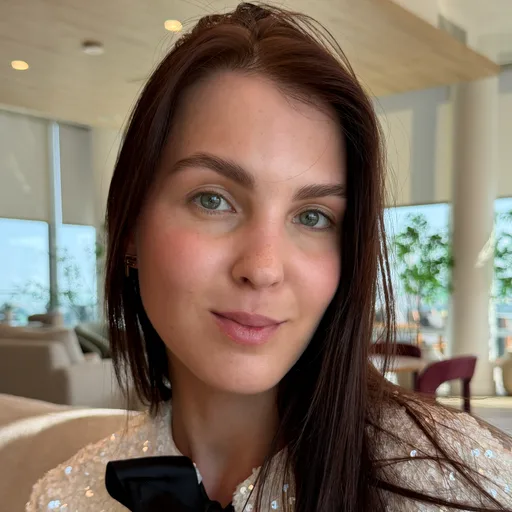
Anastasiia, NYC beauty UGC creator since spring 2026, with a stylist background. I make product videos for beauty, wellness, fashion, home and tech brands, and I write about how the business side actually works.
More about me →