Beauty brands that pay UGC creators almost always show it: they run creator-style video ads in the Meta and TikTok ad libraries, they have hired someone with 'influencer' or 'creator' in the title, their ads feature different real people rather than one model, and they are in the 20k–500k follower range with a DTC store. Brands that only repost customer photos or run an 'ambassador' program that is really an affiliate link usually gift, which is still useful when you are new. Check these signals before you spend time on a pitch.
The question I get more than any other, by a lot: “which brands should I pitch?” And the honest answer is that I can’t give you a magic list that works forever, because brands change budgets every quarter. What I can give you is the way I check, which takes five minutes and has saved me from a lot of pointless emails. Then, yes, there’s a list at the bottom.
Why this matters more than the pitch
Early on I spent a week emailing brands that were never going to reply. Beautiful brands, brands I loved, brands with 2 million followers and a customer-content hashtag. Nothing. Not because my email was bad, but because they had no line item for creators and no human reading that inbox.
Meanwhile a small body-care brand with a founder who answered her own email replied within a day and sent product, then paid for the next round. The difference wasn’t the pitch. It was that one brand worked with creators and the other didn’t. So now I check first.
The 7 signals
1. Creator-style ads in the Meta Ad Library
The biggest one. Go to the Meta Ad Library, search the brand, filter to active ads. If you see vertical videos of regular-looking people talking to camera, doing texture shots, unboxings, “I tried it for 2 weeks” formats, that’s UGC. They’re paying someone for those. Might as well be you.
If every ad is a polished studio shot of the product on a marble slab, they’re not buying UGC yet. Not never, but not now.
The TikTok Creative Center works the same way for TikTok ads.
2. Someone with “influencer” or “creator” in their title
LinkedIn search: [brand] influencer. If a human is employed to manage creators, there’s a budget, because you don’t hire someone to manage free product. Bonus signal: the role was posted or filled in the last six months, which means the program is growing.
3. A “creators,” “collabs” or “work with us” page
Not an affiliate page. Not an “ambassador” program that’s really a discount code. An actual page or form for content creators. Even a line in the footer counts. About 30 of my pitches went through pages like this, and they’re the easiest brands to reach, because the door is already open.
4. Different faces in their content
Scroll their Instagram and their ads. If you see many different real people, in real homes, that’s a brand that buys (or at least collects) UGC regularly. If it’s one model in the same studio, they’re not.
5. The size sweet spot
Roughly 20k–500k Instagram followers and their own online store (Shopify, usually). Under 20k they often can’t pay yet, but they’ll gift, and when you’re new that’s a real brand name on your page. Over 500k, they’re often on agencies and platforms, and your cold email is one of 400. The middle is where a founder or a small marketing team makes fast decisions.
I still pitch big brands, but later, once my portfolio has a few mid-size names on it.
6. A recent launch or a seasonal push
New product in the last 60 days, or a holiday set coming? Brands need content before launches, and they’ll pay for it. A pitch that says “I saw you’re launching the body oil in October” reads very differently from “I love your brand.”
7. They’ve been in a Sephora / Ulta / Target expansion story
Retail expansion means a bigger marketing budget and pressure to prove sell-through. These brands buy a lot of content in the six months after the announcement. I keep a “recently expanded to retail” column for this reason.
The red flags (don’t waste your Tuesday)
- Only reposts customer photos with a branded hashtag and no ads. Their “creator strategy” is free, and it’s not even gifted.
- “Ambassador program” that’s an affiliate code with 10% commission. That’s not UGC, that’s sales.
- Inactive account, no posts in a month or two. Budget’s frozen or the team is gone.
- Every ad is studio-polished and hasn’t changed in a year.
- The only contact is a form or info@ and there’s no visible human on LinkedIn or Instagram. Possible, but low odds.
Scoring, the way I do it
Each signal is a point. Five or more: pitch this week and ask about budget. Three or four: pitch, expect a gifted offer, and decide in advance whether you’d take it (here’s how I answer). Two or fewer: skip, revisit in six months.
That’s my whole spreadsheet’s “score” column. It’s simple and it’s why I stopped emailing brands that were never going to answer.
The seven signals on one line each, with where I check them (the whole pass takes about five minutes per brand):
| # | Signal | Where I check it | Minutes |
|---|---|---|---|
| 1 | Creator-style video ads running now | Meta Ad Library, TikTok Creative Center | 2 |
| 2 | Someone with “influencer” or “creator” in their title | LinkedIn, brand’s team page | 1 |
| 3 | A creators / collabs / work-with-us page | Brand website footer | 0.5 |
| 4 | Different real faces in their content | Instagram grid, last 30 posts | 0.5 |
| 5 | 20k–500k followers and a DTC store | Instagram, website | 0.5 |
| 6 | A launch or seasonal push in the last 60 days | Instagram, press page | 0.5 |
| 7 | A Sephora / Ulta / Target expansion story | Google News, brand press page | 0.5 |
Five or more points and the brand goes to the top of the week’s list.
How I built the list
Signals tell you who pays; if you want brands that are openly asking for creators this week, that’s a different hunt, and I wrote it up in how to find brands looking for UGC creators.
Four months of this. Every brand I researched, pitched, got a reply from, or worked with is in one Google Sheet: brand, size, category, contact route, score, what they said, gifted or paid. It started as 40 rows in week three and now it’s about 350 beauty and wellness brands, 150 of them actually contacted, with notes like “gifted first, paid $300 for round two, wants ASMR, launches in spring.”
It’s the most useful thing in my business, more than any video. Because a good pitch to the wrong brand is worth nothing, and an okay pitch to the right brand gets you a box on your doorstep and, a few weeks later, an invoice.
The list
I’m not going to publish the whole spreadsheet here, partly because it’s my competitive edge and partly because it changes. But 30 of them are free: beauty brands with a creator program or a creator inbox that’s open right now, along with exactly where to apply to each one. Enter your email below and it’ll be in your inbox in a minute.
Then go check the signals on each one yourself. Brands change, and knowing how to look is the skill that lasts. If you want to see what the collabs from my spreadsheet actually looked like, they’re on my Instagram.
Frequently asked
How do I know if a brand pays for UGC?
Check the Meta Ad Library for creator-style video ads, look for an influencer or creator marketing hire on LinkedIn, and look for a 'creators' or 'collabs' page. Two of the three usually means budget exists.
What size beauty brand is best for UGC creators?
Roughly 20k–500k Instagram followers with their own online store. Big enough to have an ad budget, small enough that the person who buys content will read your email. Under 20k, expect gifted offers, which are fine at the start.
Do big brands like Sephora brands pay UGC creators?
Yes, but usually through agencies and platforms, with rosters and slower processes. They are worth pitching after you have a portfolio with a few smaller brands on it.
Where do you find lists of brands that work with UGC creators?
Build your own from the ad libraries and your niche, or start from a curated list. My free list of 30 beauty brands that take creator applications comes from my own outreach spreadsheet.
I post the actual collabs, behind-the-scenes and what brands reply on Instagram.
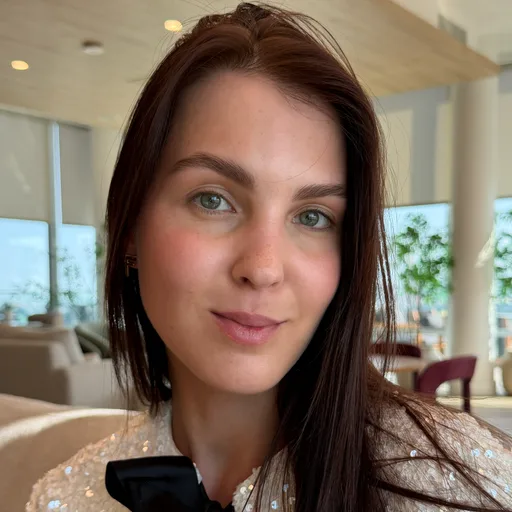
Anastasiia, NYC beauty UGC creator since spring 2026, with a stylist background. I make product videos for beauty, wellness, fashion, home and tech brands, and I write about how the business side actually works.
More about me →